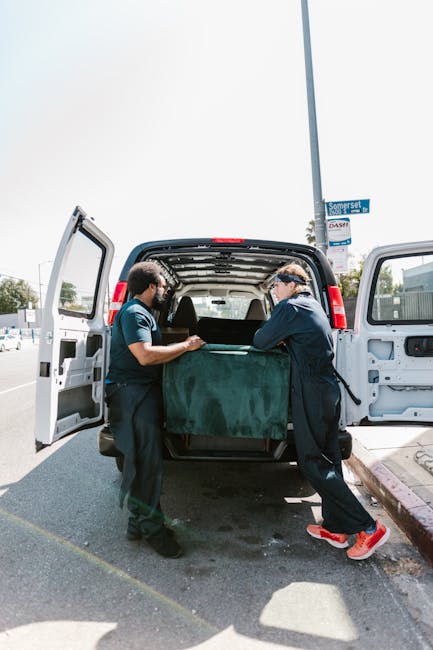
Bulky Furniture Disposal After a Pimlico Move
Moving out of Pimlico can feel wonderfully efficient one minute and oddly overwhelming the next. The keys are handed over, the last box is taped shut, and then you notice the real stragglers: the wardrobe that will not fit through the hallway, the old sofa that has seen better days, the dining table that never quite suited the flat, and the mattress that you have meant to replace for ages. That is where bulky furniture disposal after a Pimlico move becomes less of a chore and more of a proper clean finish.
If you are trying to decide what to do with large items once a move is underway, this guide walks you through the practical options, the risks to avoid, the local realities of London living, and the smartest way to clear space without turning your move into a weekend drama. To be fair, nobody wants a last-minute scramble with a heavy bookcase wedged in a narrow stairwell.
You'll also find useful links to related services and local guides, including furniture removals in Pimlico, removals in Pimlico, and recycling and sustainability information, so you can plan the whole process with a bit more confidence.
Table of Contents
- Why Bulky Furniture Disposal After a Pimlico Move Matters
- How Bulky Furniture Disposal After a Pimlico Move Works
- Key Benefits and Practical Advantages
- Who This Is For and When It Makes Sense
- Step-by-Step Guidance
- Expert Tips for Better Results
- Common Mistakes to Avoid
- Tools, Resources and Recommendations
- Law, Compliance, Standards, or Best Practice
- Options, Methods, or Comparison Table
- Case Study or Real-World Example
- Practical Checklist
- Conclusion
- Frequently Asked Questions
Why Bulky Furniture Disposal After a Pimlico Move Matters
Bulky furniture disposal is not just a tidy-up task. It is part of finishing a move properly. In a place like Pimlico, where many homes are flats, maisonettes, and period conversions with tight entrances or awkward staircases, large furniture can become a serious bottleneck. One oversized wardrobe can hold up the final handover, block access for cleaners, or create an ugly pile in a hallway that is already narrow enough.
There is also the emotional side. After a move, people often realise that some furniture no longer fits the new space, the new layout, or the way they actually live. A huge sectional may have worked in your last living room, but in a smaller Pimlico flat it can dominate the room and make everything feel cramped. Let's face it, sometimes the move is what finally exposes the furniture that has been over-staying its welcome.
Then there is the practical cost of delay. Keeping unwanted items around for "later" can lead to storage fees, extra labour, or another trip back to the property. If your move is part of a chain, timing matters even more. You may need the old place fully clear by a strict deadline, and last-minute disposal can become a very expensive bit of chaos.
For readers planning a broader move, our house removals in Pimlico page gives a good sense of how the overall removal process fits together, while flat removals in Pimlico is especially relevant if you are dealing with stairs, lifts, or limited access.
Expert summary: The best bulky furniture disposal plan is the one that is decided before moving day, not after the sofa is already blocking the doorway.
How Bulky Furniture Disposal After a Pimlico Move Works
In plain English, bulky furniture disposal means arranging for large household items to be removed, reused, recycled, or responsibly discarded once you no longer need them. The exact route depends on the item, its condition, and how quickly you need it gone.
Usually, the process falls into one of these paths:
- Reuse or donation if the item is still in decent condition.
- Collection for recycling if parts of the furniture can be recovered.
- Specialist removal if the item is too heavy, awkward, or fragile to move yourself.
- Council or private disposal where local collection services or a removal company handles the logistics.
The detail matters. A pine table with a few cosmetic marks is very different from a broken wardrobe with loose panels and exposed fixings. Some items can be dismantled to make them easier to transport. Others should be left intact because they are more likely to be damaged when taken apart. A good mover will usually look at access first: lift size, stairs, parking, distance from door to vehicle, and whether the item will need two people or more.
If you are already comparing service options, man and van in Pimlico and man with van Pimlico are useful pages to review. They help you judge whether you need a straightforward collection run or something more structured. For larger or mixed-item jobs, removal services in Pimlico may be the better fit.
One small but important point: disposal and moving are not always the same service. If an item is going to a new address, you may need transport. If it is leaving your life altogether, you need disposal or clearance. Sounds obvious, but people mix them up all the time when the pressure is on.
Key Benefits and Practical Advantages
When bulky furniture is dealt with properly, the benefits go beyond a cleaner room. The whole moving experience tends to feel calmer and more manageable. That may sound a bit soft, but anyone who has tried to squeeze a mattress through a communal corridor knows calm has real value.
- More floor space immediately in your new home or in the vacated property.
- Less moving-day stress because nobody is improvising with heavy lifting at the last minute.
- Lower risk of damage to walls, bannisters, doors, and flooring.
- Better access for cleaning and decorating once the old furniture is gone.
- More responsible end-of-life handling for items that can be recycled or reused.
- Potential cost savings if you avoid extra storage or repeated transport.
There is also a psychological benefit that people do not mention enough. Clearing old, oversized furniture creates a bit of breathing room. Your new place starts to feel like your place, not a half-packed transition zone. In a busy part of London, that matters. Space is precious. So is your time.
For some readers, the savings come from bundling services sensibly. For example, if you are already arranging a move, adding disposal to the same booking can be more efficient than organising it separately. It is worth checking pricing and quotes early so you know what is included and what may be treated as an extra.
Who This Is For and When It Makes Sense
This is for anyone leaving a Pimlico property with furniture they do not want to keep. That could be a tenant ending a lease, a homeowner downsizing, a landlord clearing a flat, or someone moving a family home and discovering that half the furniture no longer suits the next address.
It is especially useful in situations like these:
- You are moving from a larger property into a smaller flat.
- You have bought new furniture and do not want to move the old pieces.
- An item is too worn, broken, or water-damaged to justify reusing.
- You need the old property cleared quickly for cleaning, repairs, or check-out.
- You are helping a relative move and need to handle long-standing household furniture.
- You run a small office or home office and are replacing desks, chairs, or storage.
Students often run into this too, especially when moving between rented rooms and flats. For lighter but still practical support, student removals in Pimlico can be a useful starting point. And if the job is part of a broader relocation, removals in Pimlico provides the wider context.
One realistic scenario: a couple moves out of a third-floor flat near the station and realises the old wardrobe will not make sense in their new place. Rather than hauling it twice, they arrange disposal before moving day. Simple decision. Less lifting. Far fewer regrets.
Step-by-Step Guidance
Here is a practical way to handle bulky furniture disposal without turning the move into a mess.
- List every bulky item early. Go room by room. Include beds, sofas, dining tables, wardrobes, shelving, and office furniture. Be honest about what you will actually keep.
- Separate keep, move, donate, and dispose. This is the point where decisions get easier. If you are hesitating over an old chest of drawers, ask whether you would pay to move it if you were starting fresh today.
- Check condition and access. Measure wide items, note dismantling points, and look at stair width, lift size, and parking. Some buildings in Pimlico are charming. Charming, yes. Spacious? Not always.
- Decide whether reuse is realistic. If the item is clean, safe, and functional, donation or resale may be better than disposal. If it is sagging, damaged, or non-compliant with safety standards, disposal is usually more sensible.
- Choose the right removal option. For one or two items, a smaller vehicle or a removal van in Pimlico may be enough. For multiple items or heavier loads, a full clearance service may be the wiser call.
- Book the collection at the right time. Ideally, schedule it before final cleaning and after you have decided what is staying. If you need speed, same-day removals in Pimlico may be relevant depending on availability.
- Prepare items for safe handling. Remove drawers, loose shelves, glass parts, and detachable legs where appropriate. Tape loose doors. Bag screws and small fittings together. Little details, but they save a headache later.
- Confirm where the items are going. Reuse, recycling, transfer to storage, or disposal should be agreed in advance. If you are using storage in Pimlico as a temporary bridge, make sure you know which items are being stored and for how long.
One thing that makes the whole process smoother is packing support. If you are still boxing up books, lamps, or smaller household bits, packing and boxes in Pimlico can help you keep the move organised rather than scattered.
Expert Tips for Better Results
Most disposal problems are not caused by the furniture itself. They happen because the plan is fuzzy. These small habits make a big difference.
- Measure first, then decide. If a sofa or wardrobe will not fit the new space, do not wait until moving day to find out.
- Photograph large items. Pictures help if you are asking for a quote, arranging donation, or checking whether something can be dismantled.
- Keep your schedule realistic. London access can be fiddly. Parking, loading time, and lift delays all add up.
- Protect communal areas. Use blankets or covers if items need to pass through hallways or lifts. A quick scratch on a painted wall can become a very annoying deposit issue.
- Think about resale honestly. Some furniture has value; some just has sentiment. They are not the same thing. Truth be told, the market can be brutally practical.
- Separate reusable parts. Metal frames, clean timber, and usable fittings may be easier to recycle if they are split out properly.
If you are comparing providers, it helps to choose one that understands both moving and safe handling. Removal companies in Pimlico and about us can tell you more about the operator's approach, while insurance and safety is a sensible page to check if you want peace of mind around handling and transit.
Also, if something feels too large to manage alone, it probably is. That is not weakness. That is common sense.
Common Mistakes to Avoid
Bulky furniture disposal tends to go wrong in the same few ways. Here are the big ones to watch out for.
- Leaving it until the final hour. This is the classic mistake. It turns a straightforward decision into a rush job.
- Assuming every item can be carried down easily. Narrow staircases and awkward corners are very real obstacles.
- Mixing disposal with moving without clear instructions. If you want one item kept, one item stored, and one item removed, say so clearly.
- Forgetting building rules or access windows. Some blocks have specific loading times or lift rules.
- Ignoring hidden damage. A loose frame, broken leg, or sharp edge can make a heavy item much riskier to move than it first appears.
- Not checking what happens after collection. You want the item handled responsibly, not just dumped into another problem.
There is also the mistake of overestimating what a friend with a van can comfortably do in one trip. Helpful, yes. But if the load is awkward or heavy, it can quickly become one of those "well, this seemed like a good idea at the time" situations.
And one more: not asking about payment or booking terms in advance. Payment and security and terms and conditions are boring pages only until you need them. Then they are very useful.
Tools, Resources and Recommendations
You do not need a van full of gear to make this work, but a few simple tools help a lot.
- Measuring tape for doorways, corridors, and item dimensions.
- Basic screwdriver set for dismantling furniture where appropriate.
- Strong tape and small bags for screws, bolts, and fixings.
- Moving blankets or furniture covers to protect surfaces and hallways.
- Gloves with grip for handling rough edges or heavier items.
- Notebook or phone checklist so nothing gets missed in the final rush.
From a service standpoint, these pages may help you compare what you actually need: services overview, man with a van Pimlico, and man and a van Pimlico. They are useful if your job is somewhere between full removals and a quick clearance.
If sustainability matters to you, take a look at recycling and sustainability. It is a good reminder that not everything bulky has to end up as waste. Some materials can be reused, recovered, or diverted responsibly, depending on condition and handling.
For a local angle, readers moving within the neighbourhood may also appreciate the Ebury Bridge Estate movers guide. It adds context if your move is within the wider Pimlico area and you are dealing with estate access, timing, or building logistics.
Law, Compliance, Standards, or Best Practice
Without getting bogged down in legal jargon, there are a few sensible principles to keep in mind in the UK.
First, furniture should be disposed of responsibly. That generally means using legitimate services, following local rules, and avoiding fly-tipping or informal dumping. If someone offers to "take it away cheap" with no clear paperwork, no explanation of where it will go, and no proper contact details, that is a warning sign. Cheap can become expensive very quickly if the item ends up causing a problem later.
Second, access and safety matter. Moving large furniture in shared buildings should be done with care for stairways, lifts, floors, fire exits, and neighbouring residents. That is just good practice, and in many buildings it is expected as part of normal occupancy.
Third, if you are hiring a company, it is reasonable to expect clear communication about the scope of work, insurance, payment methods, and complaint handling. If you need to check those basics, the following pages are useful reference points: health and safety policy, complaints procedure, privacy policy, and accessibility statement.
For a company handling furniture clearances, trust also comes from how carefully they treat people, property, and disposal practices. That is where a public-facing modern slavery statement can be part of the wider picture of responsible operation. Not flashy, perhaps. But it does tell you something about standards.
Options, Methods, or Comparison Table
Different disposal routes suit different situations. Here is a simple comparison to help you decide.
| Option | Best For | Pros | Trade-offs |
|---|---|---|---|
| Donate or reuse | Clean, safe, usable furniture | Lower waste, potential goodwill, often very practical | Requires acceptable condition and someone willing to take it |
| Private sale | Items with clear resale value | Can recover some money, keeps furniture in use | Time-consuming, collection arrangements can be awkward |
| Specialist disposal | Heavy, awkward, or damaged bulky items | Convenient, safer handling, less stress on moving day | Usually costs more than doing it yourself |
| Storage first | Uncertain decisions or temporary moves | Buys time and avoids rushed disposal | Storage costs can add up if you delay too long |
| DIY disposal | Very small loads with easy access | Flexible, potentially lower direct cost | Hard work, transport risks, and access issues |
If your move is part of a bigger property transition, there is a strong chance that a combined service makes sense. It reduces back-and-forth, and for many people that is the difference between a smooth day and a deeply irritating one.
Case Study or Real-World Example
A common Pimlico scenario goes like this. A tenant is moving from a two-bedroom flat into a smaller place nearby. They have a large sofa, a heavy coffee table, a king-size bed frame, and a wardrobe that was assembled years ago and no one wants to disassemble. At first, the plan is to keep everything and "see how it fits". By the time the measuring tape comes out, the truth is obvious: the wardrobe is too big, the sofa is too bulky, and the new flat needs a lighter layout.
Instead of forcing every item into the move, they separate the load into three groups. The bed frame is dismantled and moved. The sofa is assessed for donation, but because condition is poor, it is marked for disposal. The coffee table goes to storage temporarily while the final room layout is decided. A small collection job is booked so the bulky item leaves before handover. The result? Less clutter, a cleaner end-of-tenancy process, and a move that feels much more controlled.
What stands out in cases like this is not the furniture itself, but the sequencing. Once the order is right, everything gets easier. First decide. Then move. Then dispose. Not the other way round.
Practical Checklist
Use this checklist a day or two before the move, or earlier if you can. Earlier is better, honestly.
- Identify every bulky item in each room.
- Measure large furniture and check access routes.
- Decide whether each item will be kept, moved, stored, donated, or disposed of.
- Take photos of any item that may need special handling.
- Remove loose parts, shelves, drawers, and fittings where appropriate.
- Confirm whether the building has lift, parking, or loading restrictions.
- Book the right type of service for the load size.
- Ask about insurance, payment, and timing details in advance.
- Keep walkways clear on collection day.
- Do a final sweep for hidden items behind or inside furniture.
Quick takeaway: the smoother the preparation, the less likely the disposal becomes a surprise expense or a moving-day bottleneck.
Get a free quote today and see how much you can save.
Conclusion
Bulky furniture disposal after a Pimlico move is one of those tasks that looks minor on paper and turns important very quickly in real life. The good news is that it does not need to be complicated. With a bit of planning, the right service choice, and a clear view of what should stay, go, or be stored, you can finish your move with far less stress and a lot more space.
In a neighbourhood where access can be tight and time often matters, making practical decisions early is usually the winning move. Decide before the pressure builds, and the whole day feels lighter. That small shift can make a big difference.
And once the bulky furniture is finally gone, there is a quiet relief to it. The room feels bigger, the air feels easier, and the move starts to feel complete. That part, really, is worth aiming for.
Frequently Asked Questions
What counts as bulky furniture after a move?
Bulky furniture usually means large or awkward items such as sofas, beds, wardrobes, dining tables, armchairs, shelving units, and heavy office furniture. If it needs two people to lift safely, it probably belongs in this category.
Should I dispose of furniture before or after moving day?
Ideally before moving day, or at least before final handover. That gives you more control over access, reduces lifting pressure, and helps avoid delays if the old property needs to be fully clear.
Can I leave old furniture in the flat for the movers to sort out?
Only if the service has clearly agreed to remove it. Do not assume. Some removal services handle transport only, while others can also manage bulky item disposal or clearance.
Is it better to donate, sell, or dispose of old furniture?
It depends on condition, time, and convenience. Good-quality furniture may be worth donating or selling. Damaged, worn, or unsafe items are usually better disposed of responsibly.
How do I know if a wardrobe or sofa can be moved safely?
Check dimensions, weight, and access. If it will not fit through doors, stairwells, or lifts without forcing it, you should rethink the plan. A quick visual check usually tells you a lot.
Do I need special help for very heavy or awkward items?
Yes, often you do. Large furniture can damage walls, flooring, or the item itself if handled badly. Specialist removal support is worth considering when the item is oversized, fragile, or difficult to dismantle.
What if I only have one or two items to remove?
A smaller vehicle or man-and-van style service may be enough. That is usually more practical than arranging a full move for a couple of items. The best option depends on access and size.
Can bulky furniture be stored instead of disposed of?
Yes. If you are unsure whether you want to keep an item, storage can buy you time. Just be careful not to pay for storage longer than the item is worth keeping.
How do I avoid damaging walls and stairs during removal?
Use proper lifting, protect surfaces where needed, and make sure the route is clear before moving the item. In shared buildings, extra care around corners and communal hallways matters a lot.
Is bulky furniture disposal expensive?
Costs vary depending on the item, the number of pieces, access, and whether lifting, dismantling, or transport is needed. Getting a quote in advance is the easiest way to avoid surprises.
What should I check before hiring a disposal or removal service?
Look at what is included, how the company handles safety, whether insurance is in place, and what happens if plans change. Clear terms and good communication are usually a strong sign.
What happens to the furniture after it is collected?
That depends on the provider and the item. It may be reused, recycled, stored, or disposed of. If sustainability matters to you, ask how the service handles items at the end of the process.